
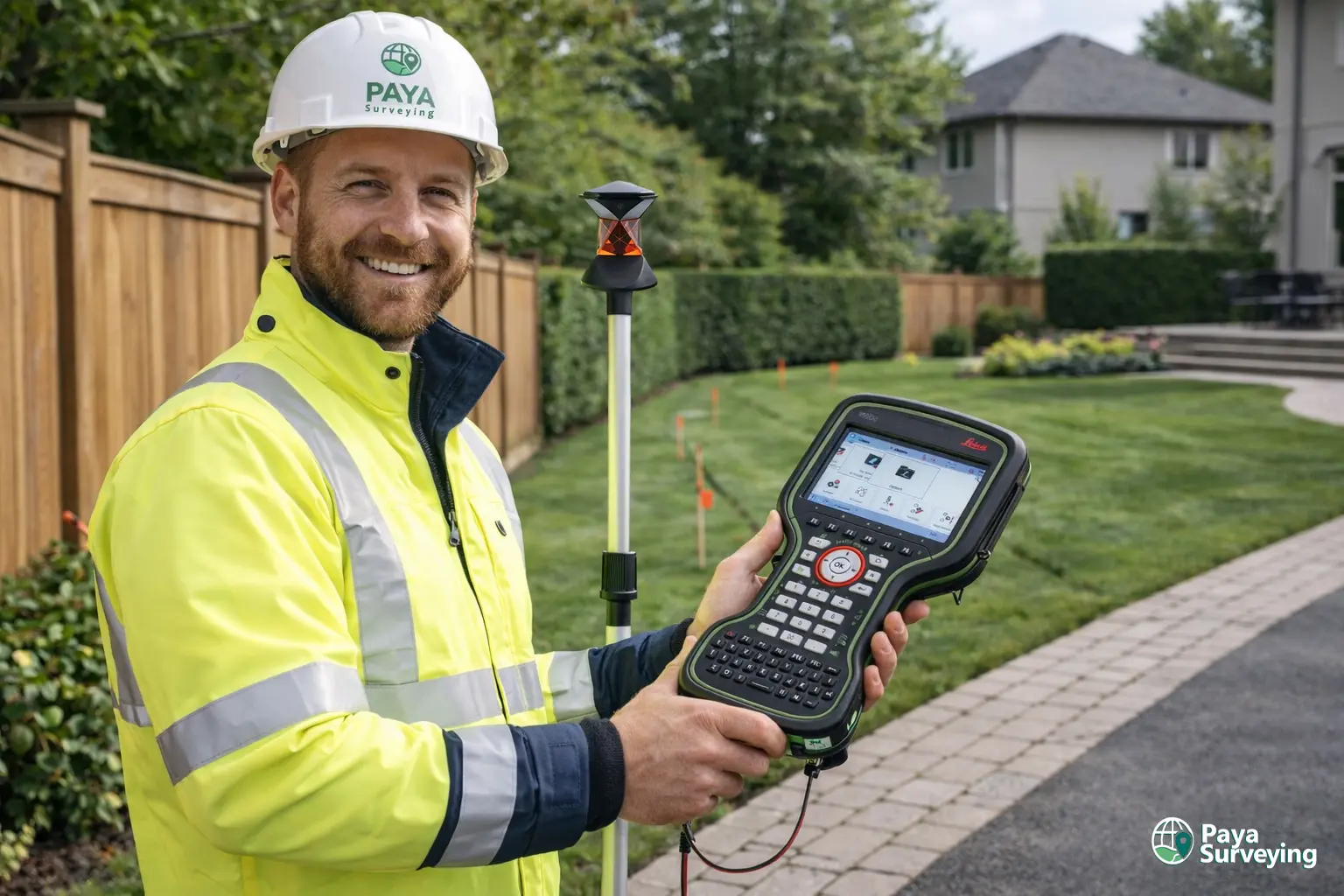
Boundary & Lot Line Survey Toronto
If you’re searching for boundary survey Toronto or lot line survey Toronto, you’re usually facing a decision that can’t be guessed: fence placement, an addition close to the line, a permit submission, buying/selling, or a suspected encroachment. Paya Surveying delivers evidence-based boundary clarity—so you can move forward confidently.
We focus on what matters: boundary evidence, record context, and a deliverable that actually supports real workflows (design, permits, construction, due diligence).
Related internal resources: Property Survey Toronto · Topographic Survey Toronto · Grading & Site Plans · Construction Layout · Surveyors Near Me
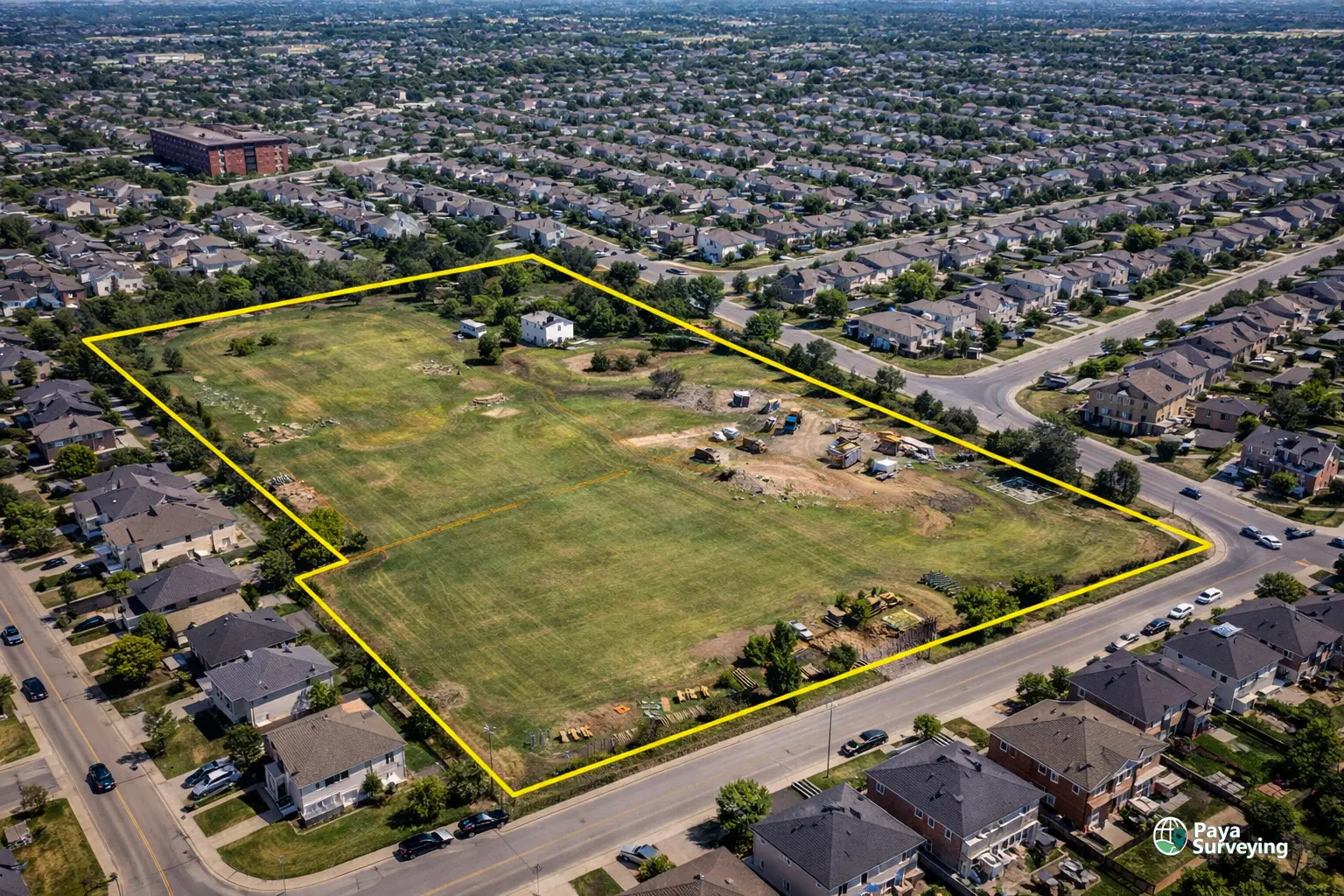
- Confirm legal lot lines before you build, buy, or redesign
- Reduce fence disputes, encroachments, and costly rework
- Clear PDF plans; CAD optional for architects/engineers
- Scope matched to your goal (fence / addition / permit / due diligence)
What a Boundary & Lot Line Survey Proves (and What It Does Not)
A boundary and lot line survey is an evidence-based determination of legal lot lines using records, boundary evidence, and measured checks. It is designed to reduce risk—especially in Toronto, where older lots, shared features, and tight setbacks create expensive mistakes.
What clients actually need: “decision-grade” boundary clarity
Many people start with “Where is my property line?” but the real question is: Can I safely make a decision near the lot line? Fence placement, additions, decks, retaining walls, and permit site plans rely on boundary position—not a hedge line or an old fence.
If your project also needs elevations for design/drainage, consider adding a Topographic Survey Toronto. For permit packages, see Grading & Site Plans.
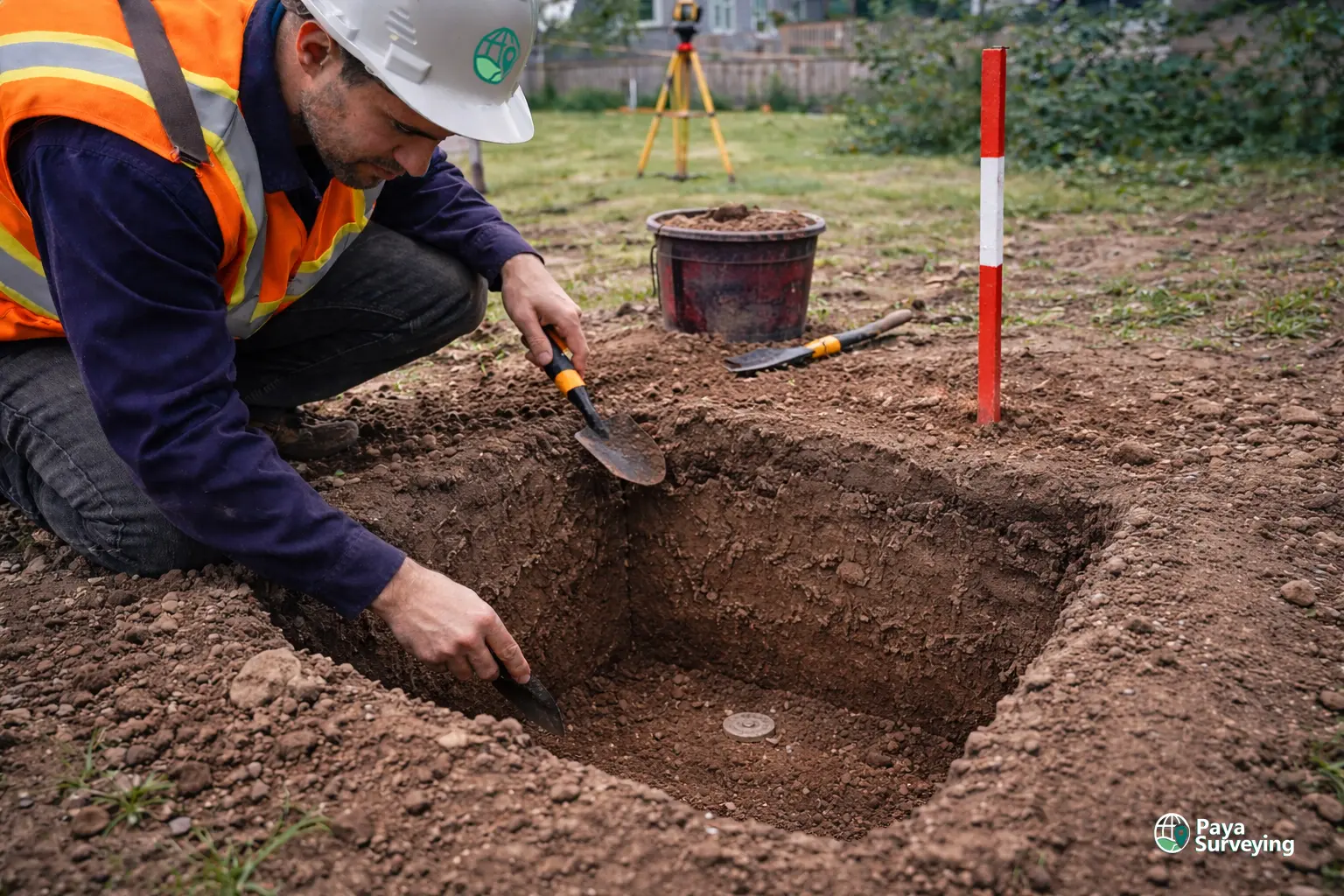
When You Need a Lot Line Survey in Toronto
The right scope depends on your goal. Below are the most common Toronto triggers where boundary certainty prevents costly corrections.
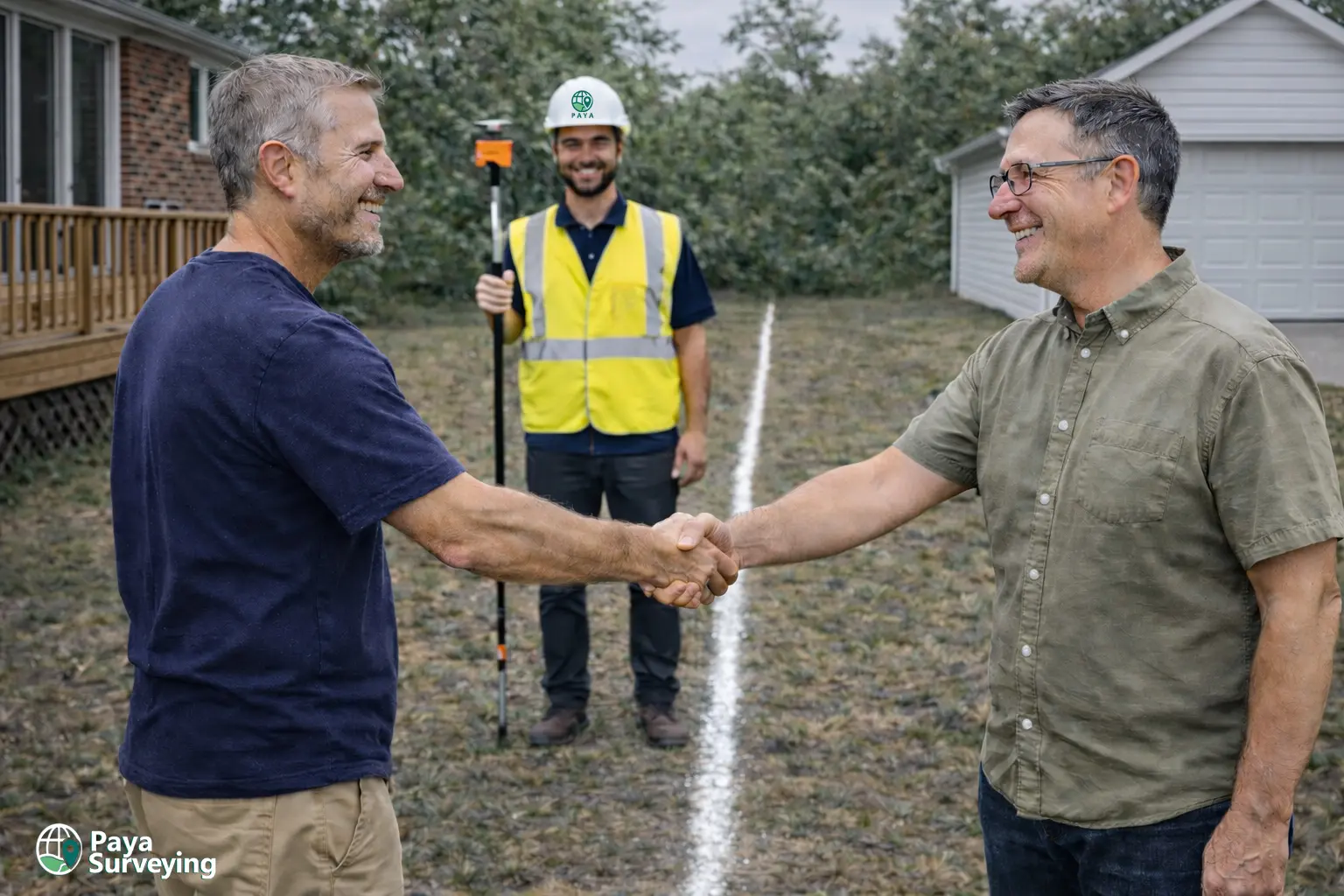
Before building or replacing a fence
Fence disputes usually start with “we assumed the fence line was the property line.” A boundary survey clarifies the legal lot line first, so your fence alignment is based on evidence—reducing removals, delays, and neighbour conflict.
Additions, garages, decks, retaining walls (near the lot line)
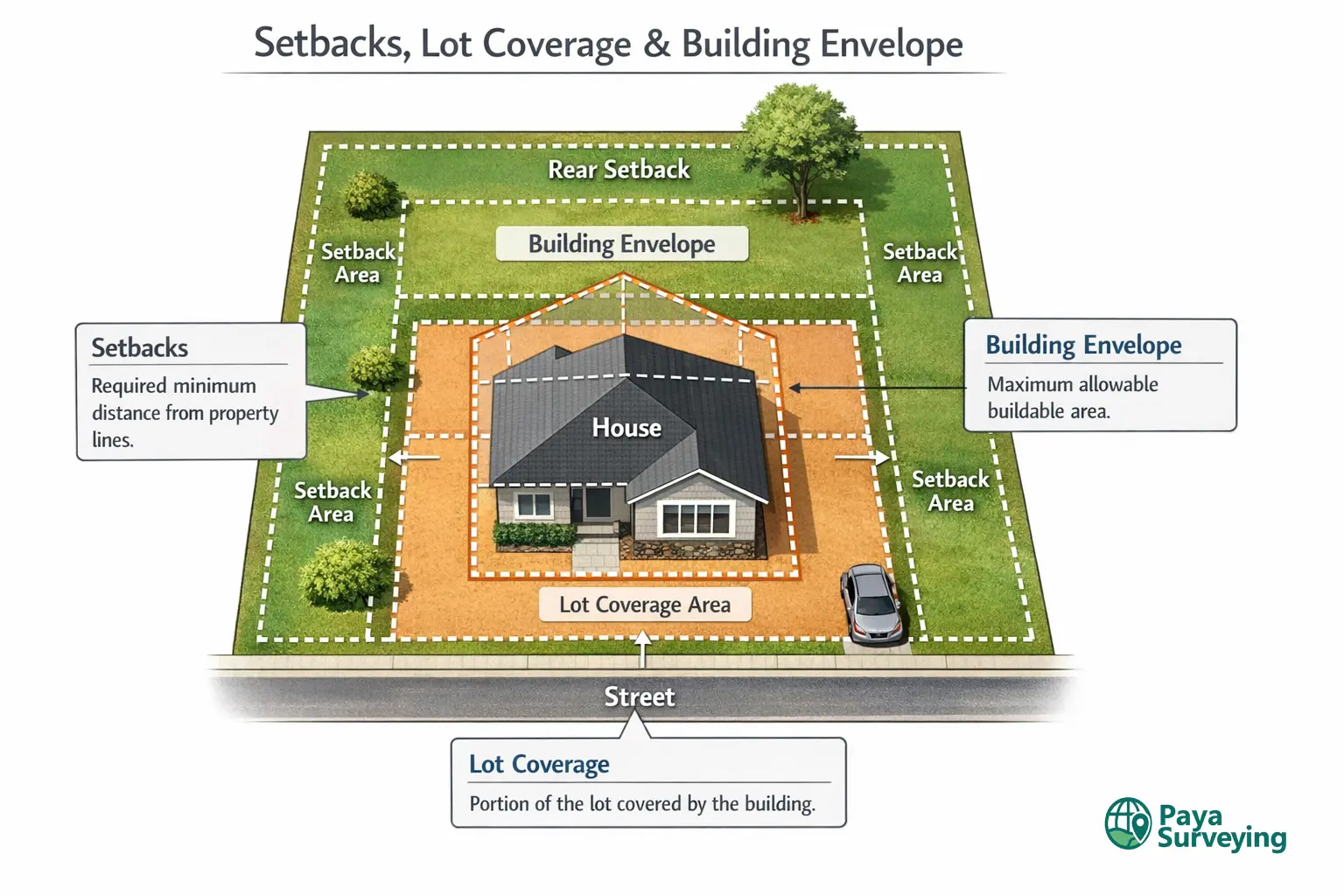
Setbacks and envelopes are measured from the legal boundary—not a fence. Boundary clarity helps designers avoid redraws and reduces permit revisions. If elevations are required for design/drainage, add a topo survey.
Buying / selling / due diligence
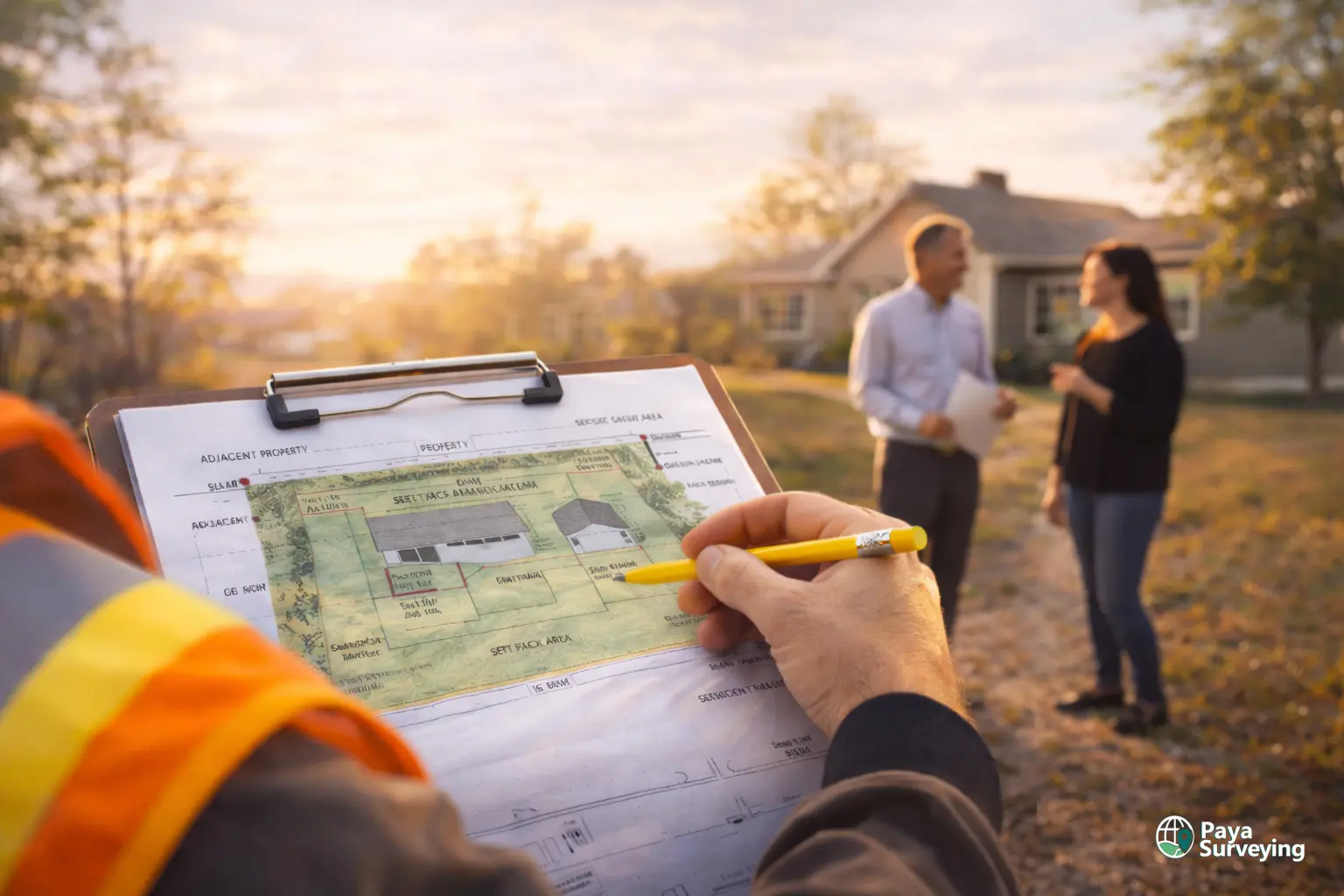
Boundary clarity can identify constraints that affect risk: suspected encroachments, shared driveways, or features that sit unusually close to the lot line. This is especially valuable before committing to a renovation or closing a transaction.
Boundary disputes & suspected encroachments
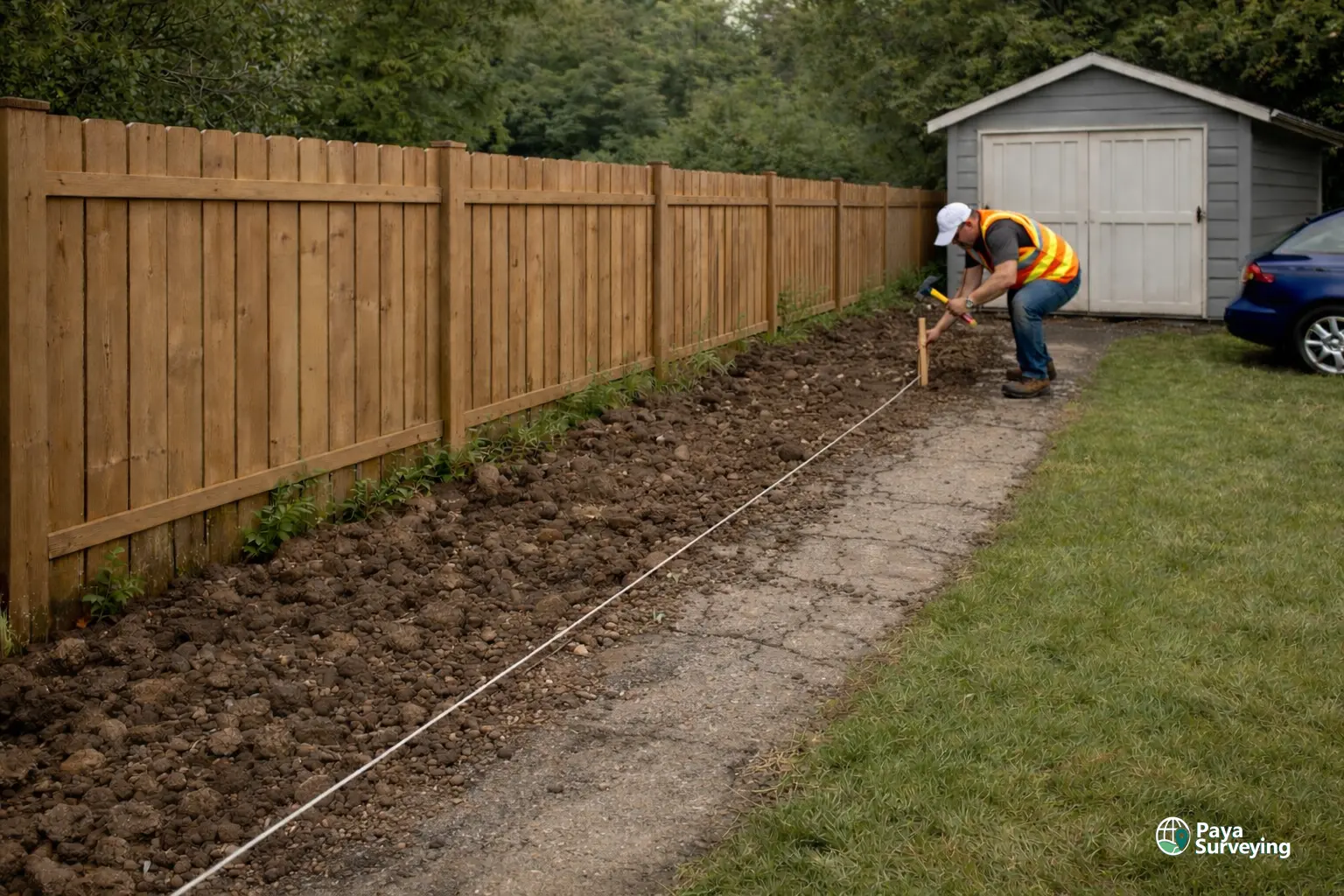
If a neighbour claims your fence/shed/driveway is over the line, the practical first step is to confirm the legal boundary with evidence and records. Avoid moving structures until boundaries are clarified.
Deliverables for a Boundary / Lot Line Survey
We keep deliverables readable and workflow-ready. Most homeowners want clarity; most designers want CAD options.
PDF plan (clear and usable)
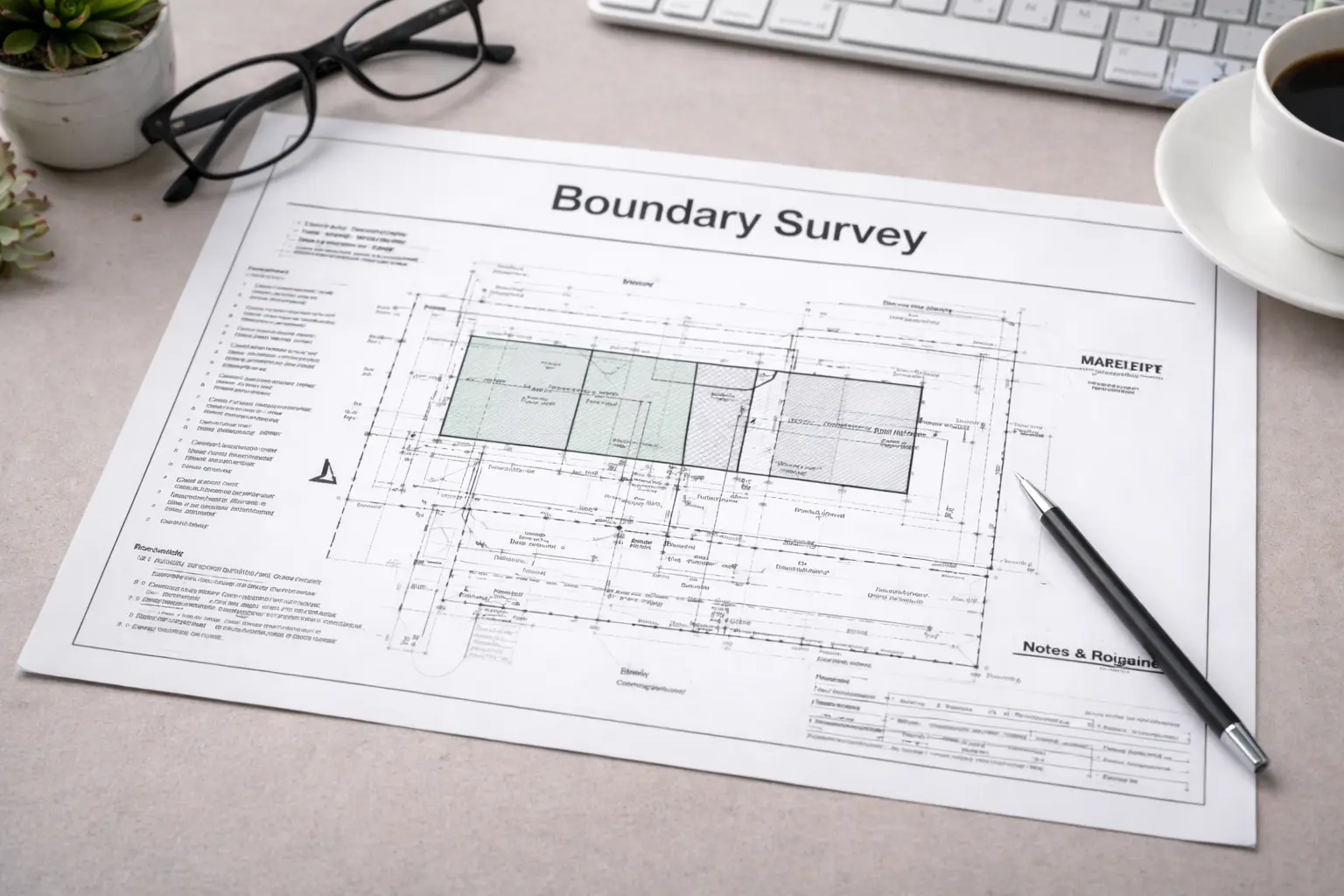
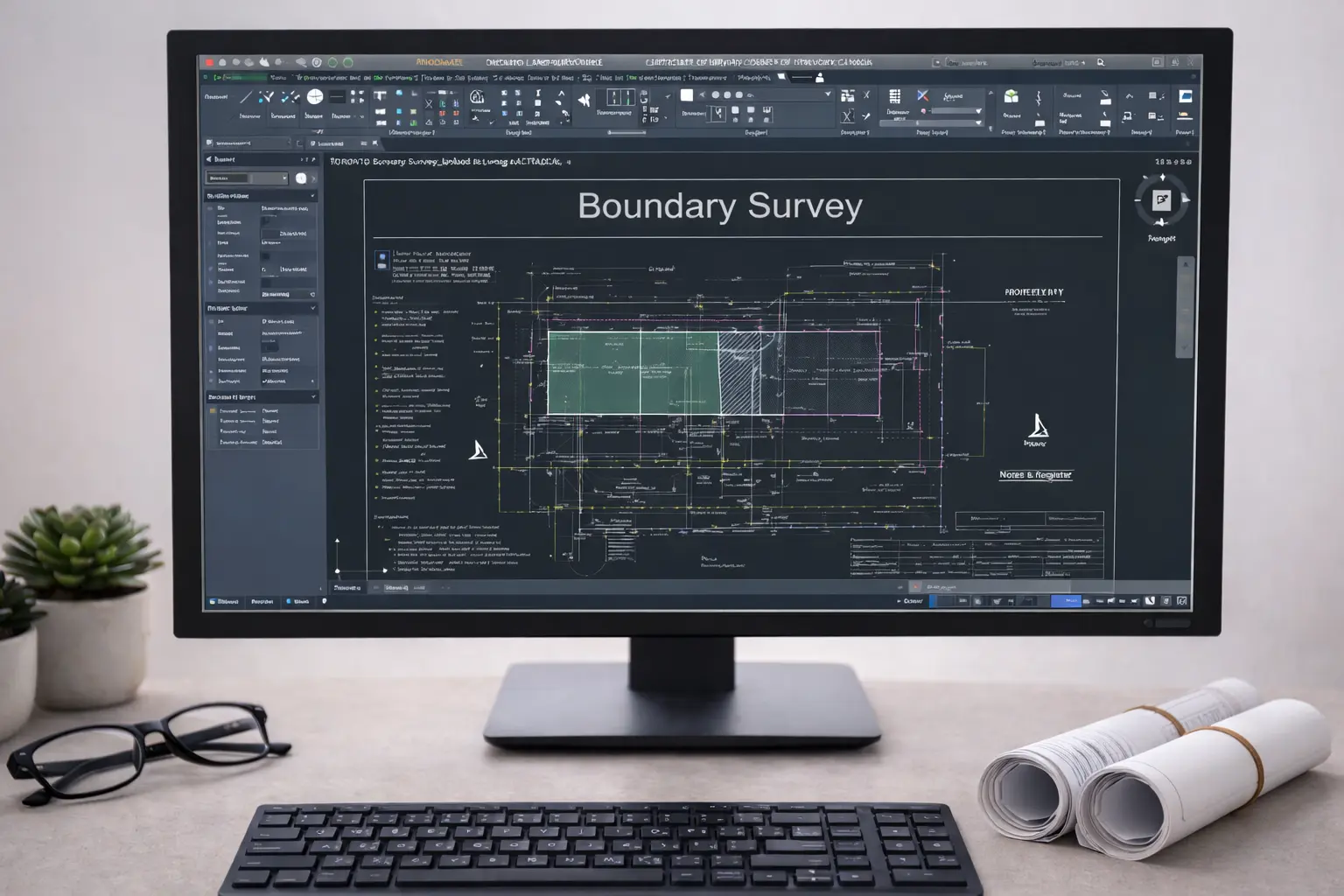
A clean PDF plan that supports your goal (fence alignment, addition planning, permit base, dispute prevention). The plan is organized so contractors and designers can interpret it quickly.
CAD-ready files (optional)
If requested, CAD-ready output helps architects/engineers keep site planning fast and accurate.
Our Process (Efficient + Evidence-Based)
The fastest projects start with clear scope. Here’s how we keep boundary work organized and practical.
1) Scope confirmation
You share your address + goal. We confirm the right scope so you don’t overpay or under-scope. Start: Instant Quote or Contact Us.
2) Record context review
We review available record context and site constraints common in Toronto lots (tight setbacks, shared features, older improvements).
3) Field evidence + measurements
Boundary evidence is located where available, then measured and checked using a methodical approach to reduce uncertainty.
4) Drafting + QA/QC
Data is processed and drafted into a clear plan. We check consistency so the deliverable is usable immediately.
5) Delivery + support
You receive the deliverable (PDF; CAD optional). We help answer designer/contractor questions to keep your workflow moving.
6) If you’re building next…
Next steps often include Grading & Site Plans and then Construction Layout.
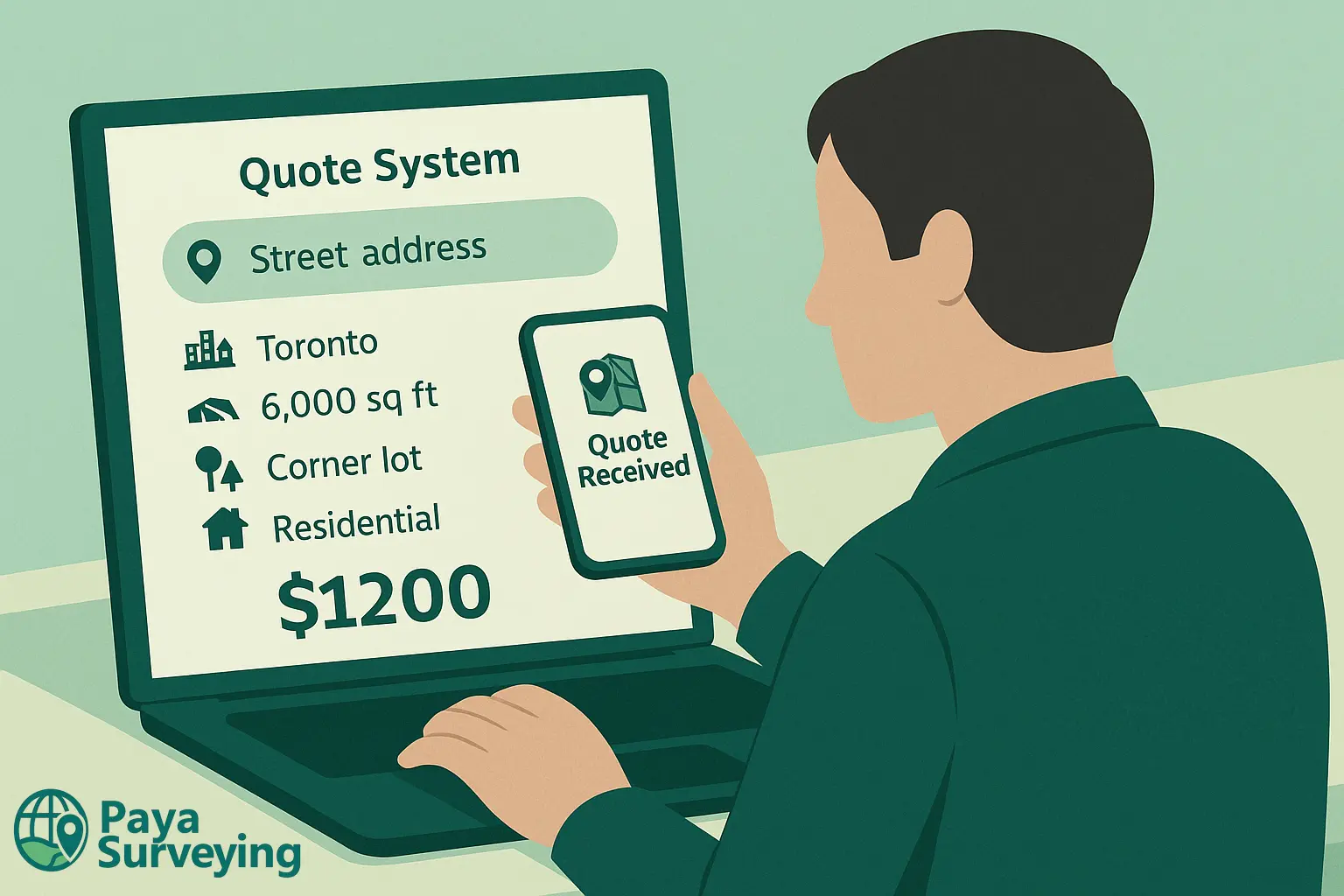
To reduce back-and-forth, we offer an instant quote for common residential survey needs. Enter your address to receive a fast estimate and view matched property details.
Thank You!
Our specialists will contact you shortly to discuss scope and next steps.
Common Toronto Homeowner Concerns (and What We Can Do)
Below are the most common “real-life” situations Toronto homeowners face near a lot line — and the most practical surveying service to solve each one. We’ll guide you to the right scope so you don’t overpay or under-scope a boundary-sensitive decision.
“My neighbour says the property line is different.”
When there are conflicting assumptions, the fastest path to clarity is an evidence-based Property Survey (Boundary / Lot Line). We use record context + boundary evidence + measured checks, then provide a clear plan that reduces ambiguity for real decisions.
“We share a driveway — who owns what?”
Shared driveways are common in Toronto, and the pavement itself isn’t proof of ownership. Start with a Property Survey (Boundary / Lot Line) to clarify boundary position and physical context.
If you’re planning improvements (widening, drainage changes, new curb/edge, rebuilding), it’s often best to add a Topographic Survey so your designer has accurate grades and existing features.
“Do I need a survey for permits?”
Many permit workflows depend on setbacks and coverage measured from the legal boundary — not a fence. If your project needs a permit-ready base, the typical best-fit is Topographic Survey combined with boundary clarity (scope matched to your project).
If you’re preparing a full submission package, you’ll likely want Grading & Site Plan Services.
Choose the right next step (quick routing)
Fence, shed, deck, retaining wall near the lot line
Start with: Property Survey (Boundary Clarity)
Addition / garage planning, tight setbacks, designer needs elevations
Use: Topographic Survey + (boundary scope as needed)
Permit package / site plan submission
Go to: Grading & Site Plan Services
Construction stage: layout, as-builts, verification
Use: Construction Layout / As-Builts
Need fast pricing first
Start: Instant Quote / Request a Quote
Not sure which service fits your case
Talk to us: Contact Us
Helpful Resources (Toronto + Ontario)
These public resources are commonly referenced by homeowners and design teams. We share them because good decisions combine boundary clarity with planning context.
City of Toronto – Building permits
Permit requirements often depend on setbacks measured from the legal lot line.
Open: Toronto Building Permit infoToronto Zoning map (interactive)
Useful for checking zones/overlays early, especially for additions and infill.
Open: Toronto Zoning MapOntario OnLand help
General guidance about land registry searches and documents.
Open: OnLand Help CentreAOLS (Ontario Land Surveyors)
Information about the land surveying profession in Ontario.
Open: AOLSBoundary & Lot Line Survey Toronto FAQs
Answers to the common “last questions” before a client hires a licensed land surveyor for lot line clarity.
Need a Boundary / Lot Line Survey in Toronto?
Tell us your address and your goal (fence, addition, permit, due diligence, dispute). We’ll recommend the right scope and deliver boundary clarity you can trust.